ServicesFlat Roofing
Flat Roofing in Apache Junction
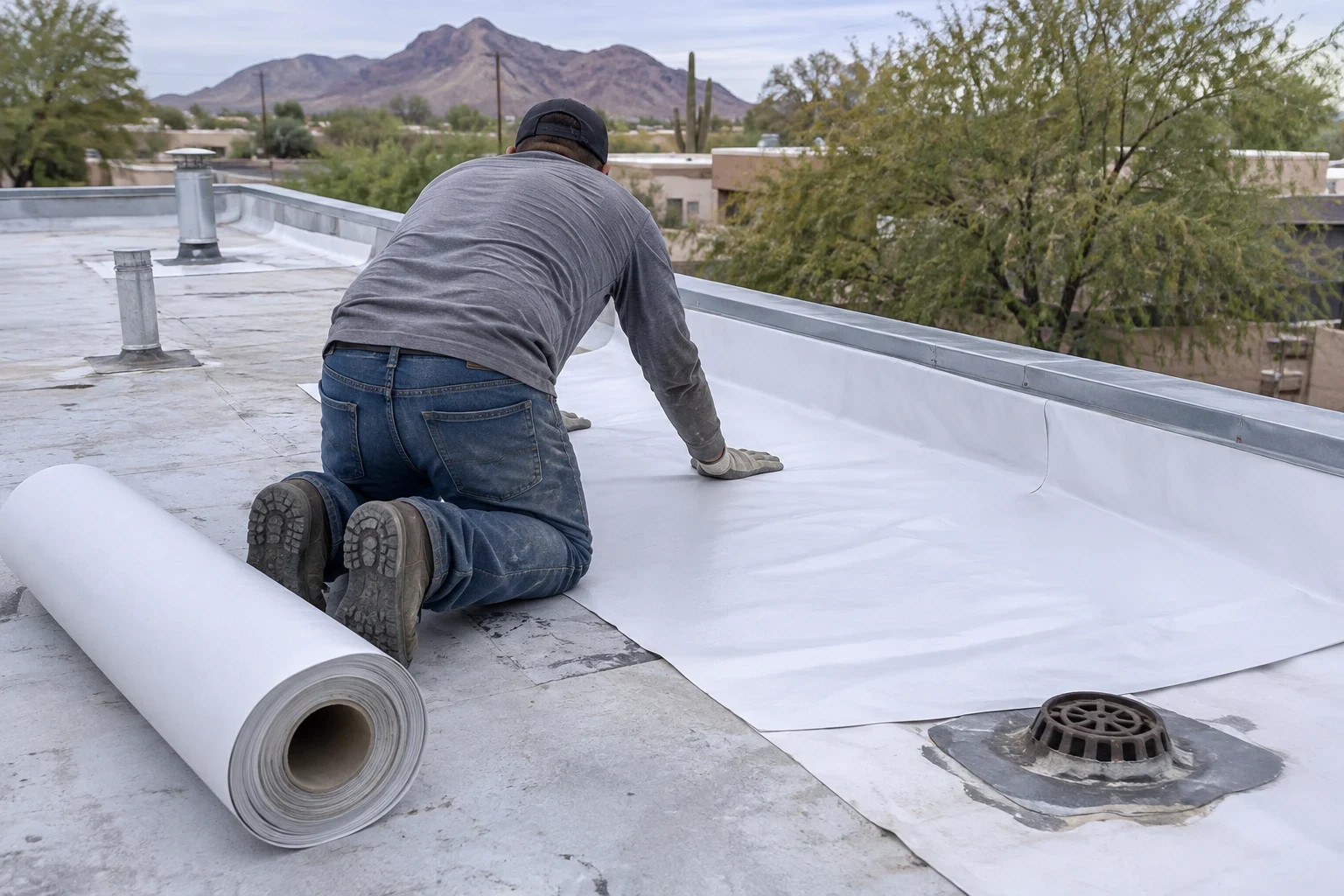
Patio covers, additions and full rooftops tucked behind parapet walls all need a membrane that sheds water and stands up to the sun. We fix flat roof leaks and put on new low-slope roofs. Before you choose, we compare each option by today's price, expected years of service and the upkeep it asks for.
Low-slope roofs need their own approach
A flat roof is never truly flat. It should fall about a quarter inch per foot toward the scuppers or drains so water leaves quickly. When rain sits for more than a couple of days, the membrane underneath wears out faster, and most of the leaks we trace start at seams, parapet walls and the curbs around rooftop cooling units.
We work with modified bitumen, single-ply membranes like TPO, and reflective coatings over roofs that are still sound. If spray foam fits your home better, we will talk through our foam roofing work too. Each option has a different price today and a different upkeep schedule, and we lay those side by side so you can see the full picture.
Intense desert sun dries out exposed asphalt and cracks old mastic, which is why a reflective surface often pays you back twice: a longer-lasting roof and a cooler room below it.
What our flat roofing work covers
Full membrane replacement
We tear off the worn layers down to the deck, replace any soft or rotted decking, and install a new membrane with sealed seams. Starting from a clean deck is what lets a new roof reach its full lifespan.
Seam and flashing repair
Lifted seams and split flashing are the most common leak points on a low-slope roof. We cut out the failed section, rebuild it and seal it properly instead of smearing on more patch compound.
Parapet walls and scuppers
Where the roof meets a parapet wall, the flashing has to turn up the wall and stay sealed tight through years of heat. We rebuild those transitions and make sure scuppers sit low enough to actually drain.
Rooftop equipment curbs
Swamp coolers, AC units and vent pipes all punch holes in the roof. We reflash curbs and penetrations so the equipment can stay where it is without becoming the next leak.
Drainage corrections
If water ponds in the same spot after every rain, we can add tapered insulation or a small cricket to push it toward the drain.
Reflective coatings
When the membrane is still in good shape, a coating can add years for far less than a new roof. We will tell you honestly whether your roof is a candidate.
Signs your flat roof needs attention
Puddles that linger
Water still there two or three days after a storm means the slope or drains aren't working. It wears the roof faster and puts weight on a deck not meant to hold it for long.
Bubbles in the surface
Raised spots show that air or moisture has gotten under the membrane. A handful can be cut out and repaired, but once they spread across the roof, it's usually near the end.
Cracking at the parapet
Fine cracks where the roof meets the wall allow water to slip behind the flashing and into the framing.
A stain below the cooler
A ceiling mark beneath the swamp cooler or AC unit nearly always means a failed curb or a leaking water line up top.
A cracked, sun-worn surface
If the top layer has cracked like dried mud or lost its granules, the sun has burned through the protection and the membrane is open to it.
From your first call to the final sweep
- 1
We talk first
Tell us about the leak, stain or pooling and about where it appears. We'll ask the roof's age and what equipment is up there, then set a day to visit.
- 2
Inspection and written estimate
We look over the seams, flashing and drainage, test how solid the deck feels and photograph what we see. You receive a written, itemized estimate with repair and replacement choices and how each affects lifespan and upkeep.
- 3
The job itself
Your yard, plants and paths get covered first. We strip the old layers, repair damaged decking and put on the new roof. You can usually stay comfortably at home the whole time, and we get a permit if the work requires one.
- 4
Clean site and final look
Debris is hauled away, the area is swept for nails, and we show you the completed roof along with photos of the parts we replaced.
What sets the price of your flat roof
Square footage alone rarely tells the whole story on a low-slope roof. The membrane you pick accounts for part of the number, but the condition of the deck under the old layers often counts for more. Every line on our estimate is spelled out, so you can see where each dollar goes and why.
- Roof size and shape
- Square footage is the starting point. Parapet walls, multiple roof levels and odd corners add flashing work and time.
- Membrane or coating choice
- A coating costs less today but needs renewing sooner. A new membrane costs more up front and asks less of you for years. We compare both over the life of the roof, not just on day one.
- Deck condition
- Soft or water-damaged decking has to be replaced before anything new goes on. We cannot know the full extent until the old layers come off, so we explain how that is handled before work starts.
- Rooftop equipment and penetrations
- Each cooler, AC unit and vent pipe needs its own flashing. More penetrations mean more detail work.
- Drainage fixes
- Adding tapered insulation or crickets to stop ponding adds material and labor, but it protects everything else you are paying for.
Flat roofing questions we hear often
Something not covered here? (480) 660-9041
What lifespan can I expect from a new flat roof?
That comes down to the material and the drainage. A membrane installed well on a deck with proper slope outlasts one left under standing water by a wide margin. Simple upkeep, such as clearing scuppers and recoating once the surface wears, buys more years. Your estimate will show a realistic range for every option.
Could a coating work instead of a new roof?
In some cases. A coating makes sense when the membrane below is dry, well bonded and largely intact. When moisture is trapped or blisters are everywhere, a coating just covers the problem for a time. We'll share photos and explain which case fits your roof.
Should a flat roof hold some standing water?
A shallow film that's gone in a day or two is fine. Water that lingers, or a puddle that returns in the same place after each rain, means the drainage needs correcting. Ignored, ponding cuts short the life of nearly any flat roof.
Will you need to take off my swamp cooler?
In most cases we lift or shift it during the work so we can roof beneath it, then reset it on a correctly flashed curb. If the cooler or its stand is in poor condition, we'll point that out so you can decide what to do.
Do you handle flat patio covers and additions?
We do. Lots of homes have a low-slope patio cover or addition joined to a sloped main roof, and that joint leaks often. We build that connection with care so both roofs shed water together.
Choose a flat roof that holds up
Give us a call and tell us what is going on up there. We will come out, show you what we find and walk you through options that make sense for your budget now and later.