ServicesNew Roof Installation
New Roof Installation in Apache Junction
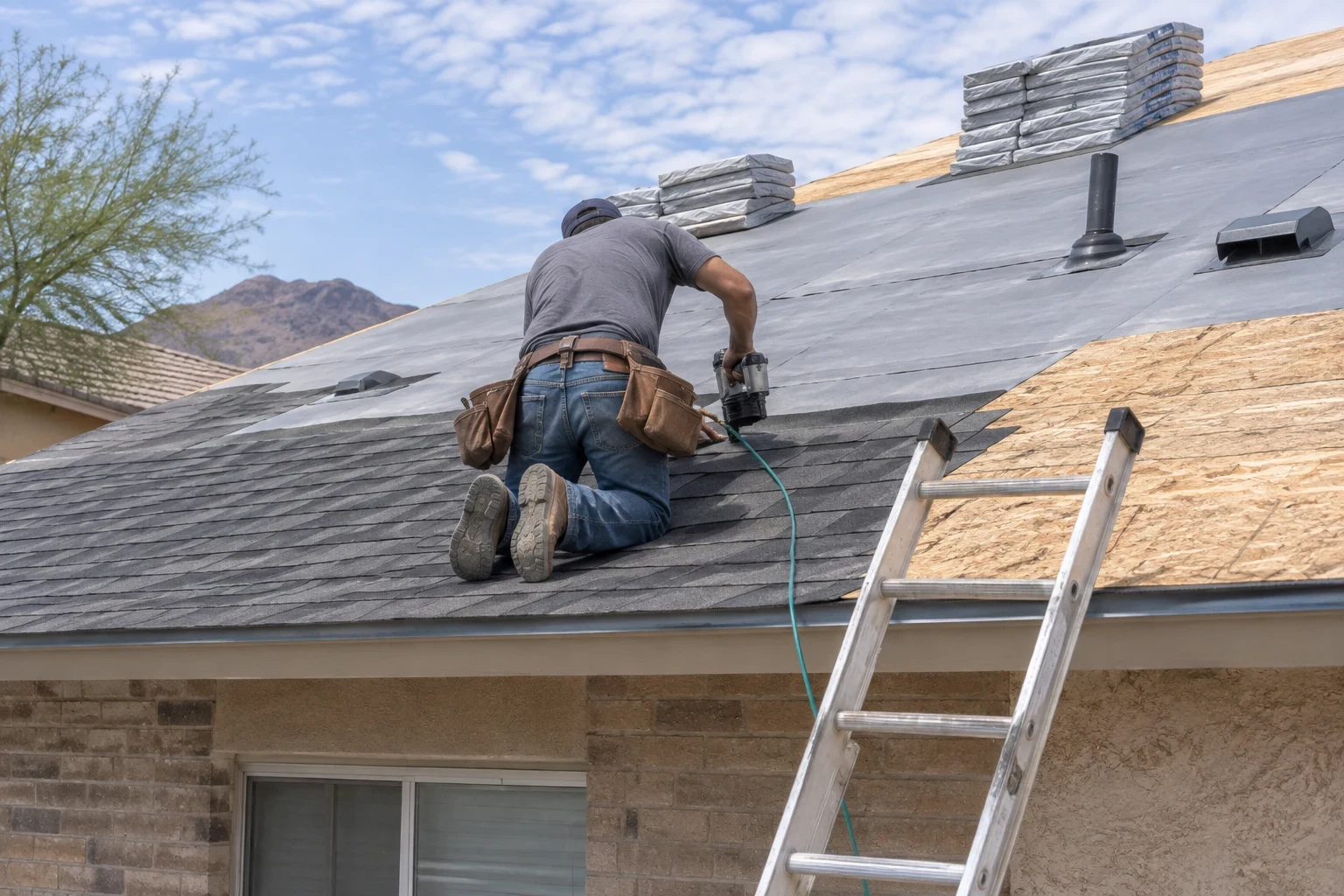
Building an addition, a casita or a whole new home? We install new roofs from the deck up and help you pick the material by what it will cost you over its life, not only what it costs to put on.
A new roof, chosen for the years after it goes on
New roof installation is for structures that don't have a finished roof yet: a room addition, a converted garage, a detached casita, a workshop or a house being built from the ground up. If you have an existing roof that's worn out, our roof replacement page covers that work instead.
The biggest decision is the material, and it's the one people most often make on price alone. A shingle roof costs less to install but needs replacing sooner. Tile costs more at the start and can last for decades, though the underlayment beneath it wears out first. Foam suits low-slope roofs and needs a fresh coating every so often. We lay those numbers side by side so you can see what each option asks of you now and later.
Then we build it properly: solid decking, the right underlayment, clean flashing and enough ventilation that the attic doesn't bake all summer.
What a new roof installation includes
- 01
Material comparison
We walk you through tile, shingle and foam for your roof's pitch and use. You'll see expected lifespan and typical upkeep for each, so the choice is yours and it's informed.
- 02
Decking and underlayment
We check the sheathing your framer installed and fasten it where needed. Then we lay underlayment rated for the material going on top, since that layer is what actually keeps water out.
- 03
Tie-ins to the existing roof
Additions have to join the main house without a weak seam. We weave or flash the new roof into the old one and seal the valley so runoff moves past the joint instead of into it.
- 04
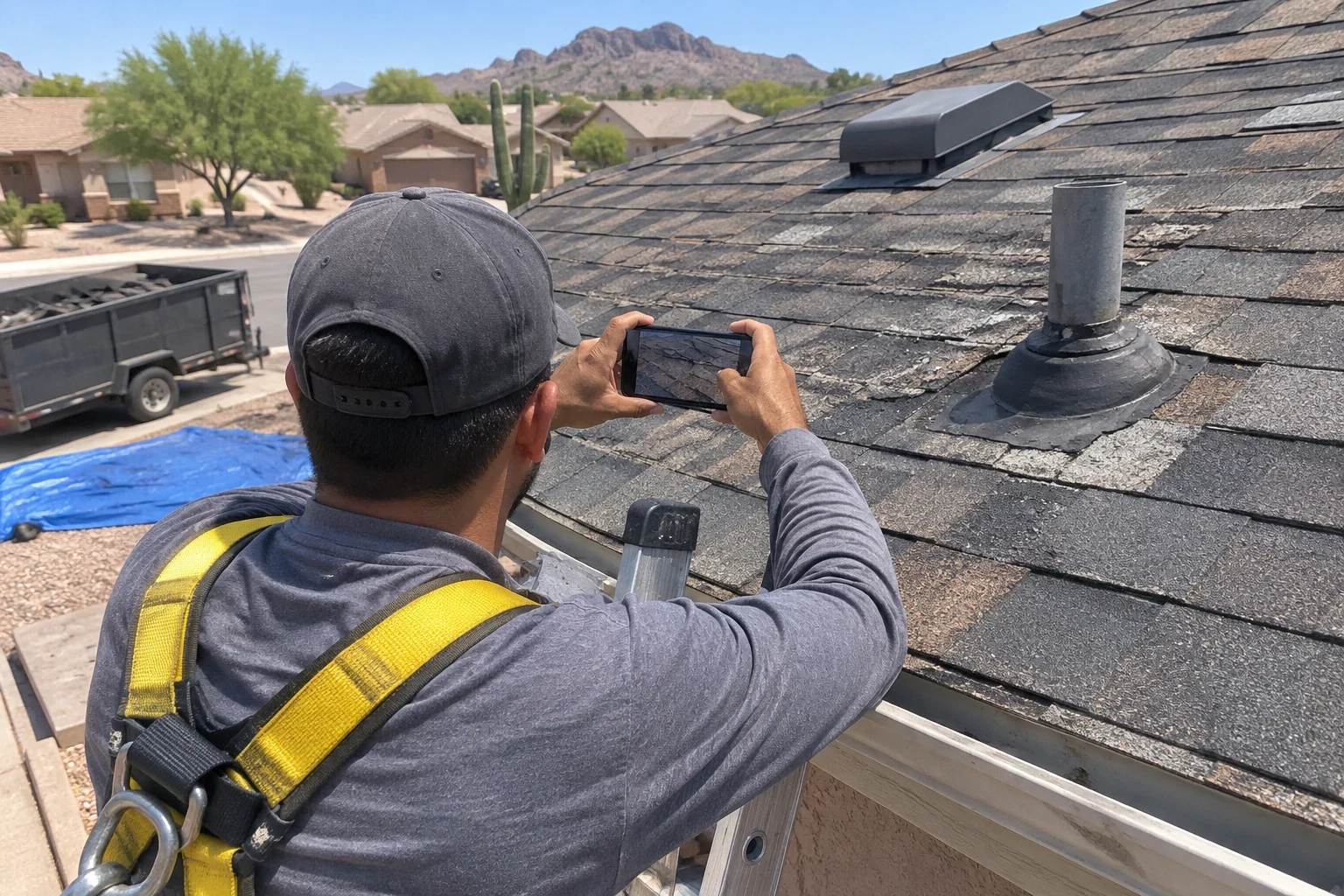
Flashing and penetrations
Walls, vents, skylights and plumbing stacks each get flashing sized for them. Most leaks on newer roofs start at these spots, so we don't rush them.
- 05
Ventilation
Intake and exhaust vents are balanced for the attic space. Good airflow lowers heat buildup and helps shingles and underlayment last longer.
- 06
Permit and cleanup
We pull the roofing permit and schedule the required inspections. Each day ends with a magnet sweep for nails and the debris hauled off.
Questions about New Roof Installation?
Call(480) 660-9041When new roof installation is the right call
You're adding square footage
A bedroom, a bigger kitchen or an enclosed Arizona room all need a roof that matches the house and drains properly where the two meet.
A casita or guest house is going up
Detached buildings are a chance to pick a material on its own merits. Foam or a low-slope system can make sense here even if the main house is tile.
You're building a custom home
We can work alongside your builder and come in once framing and sheathing are ready, with materials ordered ahead so the schedule holds.
A patio cover or garage is being closed in
Open structures often have roofing that was never meant to protect living space. Turning one into a room usually means a new roof built to that standard.
The current setup was never really finished
Some outbuildings sit under temporary panels or bare sheathing for years. A proper roof protects whatever you keep inside.
How the job goes, start to finish
- 1
We talk it over by phone
Tell us what you're building and how far along it is. We'll ask about the plans, the pitch and any schedule your builder has set.
- 2
A visit and a written estimate
We check the framing and measure. Your itemized estimate puts the material choices side by side, each with its expected lifespan and upkeep.
- 3
Permit and ordering
We apply for the permit and time the material order to land when the deck is ready. In the hottest months we start early in the morning to protect both the crew and the materials.
- 4
Putting the roof on
Underlayment, flashing, vents and the top surface go down in sequence. A small addition may take a day or two. A whole new house takes longer, and you'll know the timeline before work begins.
- 5
Inspection and final walk
Once the inspector approves the work, we go over the roof and yard with you, answer your questions and explain the upkeep your new roof will need.
What shapes the price of a new roof
No two new roofs are priced the same, because each one comes from its own plans and measurements. We quote once we've seen the structure. Your estimate lists every part of the job separately, and we'll point out where spending a little more now can save you money over the roof's life.
- Roof area and slope
- A bigger footprint takes more underlayment, more surface material and more hours from the crew. A steep slope adds harnesses and roof jacks, and the work goes slower when footing is harder.
- Material choice
- Tile, shingle and foam start at very different prices and last very different lengths of time. Weighing the install cost against the years of service is how you see which one is the better deal for you.
- Tie-in complexity
- Roofing a freestanding casita is simpler than joining an addition to an existing tile roof. Valleys and the search for tile that matches older pieces both add labor.
- Deck condition and access
- If the sheathing needs more fasteners or a few boards swapped out, that shows up on the estimate. A tight lot with little room to stage materials can also stretch the schedule.
- Permits and scheduling
- Permit fees and inspection timing are part of the total. So is lining our work up with your builder's calendar.
New roof installation questions
Which material gives the best value?
It depends on how long you plan to keep the home and the pitch of the roof. Tile usually costs the most to install but lasts longest with light upkeep. Shingles cost less now and will need replacing earlier. On low-slope roofs foam is often the better pick, and our flat roofing page explains why.
Will the new roof match my existing house?
Usually, yes. We find the closest tile or shingle profile and color still on the market. Older tile may be discontinued or faded by the sun, so we bring samples to compare against your roof before ordering.
Do you coordinate with general contractors?
Yes. We keep in contact with your builder about when the deck will be ready and plan our crew and deliveries to match, so the roof moves along with the rest of the project rather than holding it up.
Is a permit needed for a new roof?
A new roof over living space usually requires a permit and one or more inspections. We file the paperwork and schedule those inspections as part of the job.
Can you install a roof in the summer?
We can. Crews begin at daybreak to beat the heat. During monsoon season we track the forecast carefully so an open deck is never caught by an approaching storm.
Ready to choose the right roof for what you're building?
Tell us about your project and we'll explain which materials fit it and what each will ask of you over the years. Then you can decide with all the numbers in front of you.