ServicesTile Roofing
Tile Roofing in Apache Junction
Tile can outlast almost any other roof on your home, but only when what's underneath is done right. We install, re-lay and repair concrete and clay tile, and we show you how each option compares on cost now and upkeep later.
Why Tile Makes Sense, and When It Doesn't
Concrete and clay tiles handle sun and heat well. They don't curl or blister the way some materials do, and a well-made tile can stay in service for a very long time. That's the good news.
The part most people don't see is the underlayment. It's the layer under the tiles that actually keeps water out, and in strong summer heat it dries out, cracks and wears through long before the tiles give up. Many tile roofs that leak still have perfectly good tile on top.
So our job is often less about selling new tile and more about matching the work to what your roof needs. Sometimes that's a few cracked pieces and fresh mortar. Sometimes it's lifting the tile, replacing the underlayment and putting your existing tile back. We'll explain the difference in plain terms and show you how each choice plays out over the years.
What Our Tile Roofing Work Covers
New tile installation
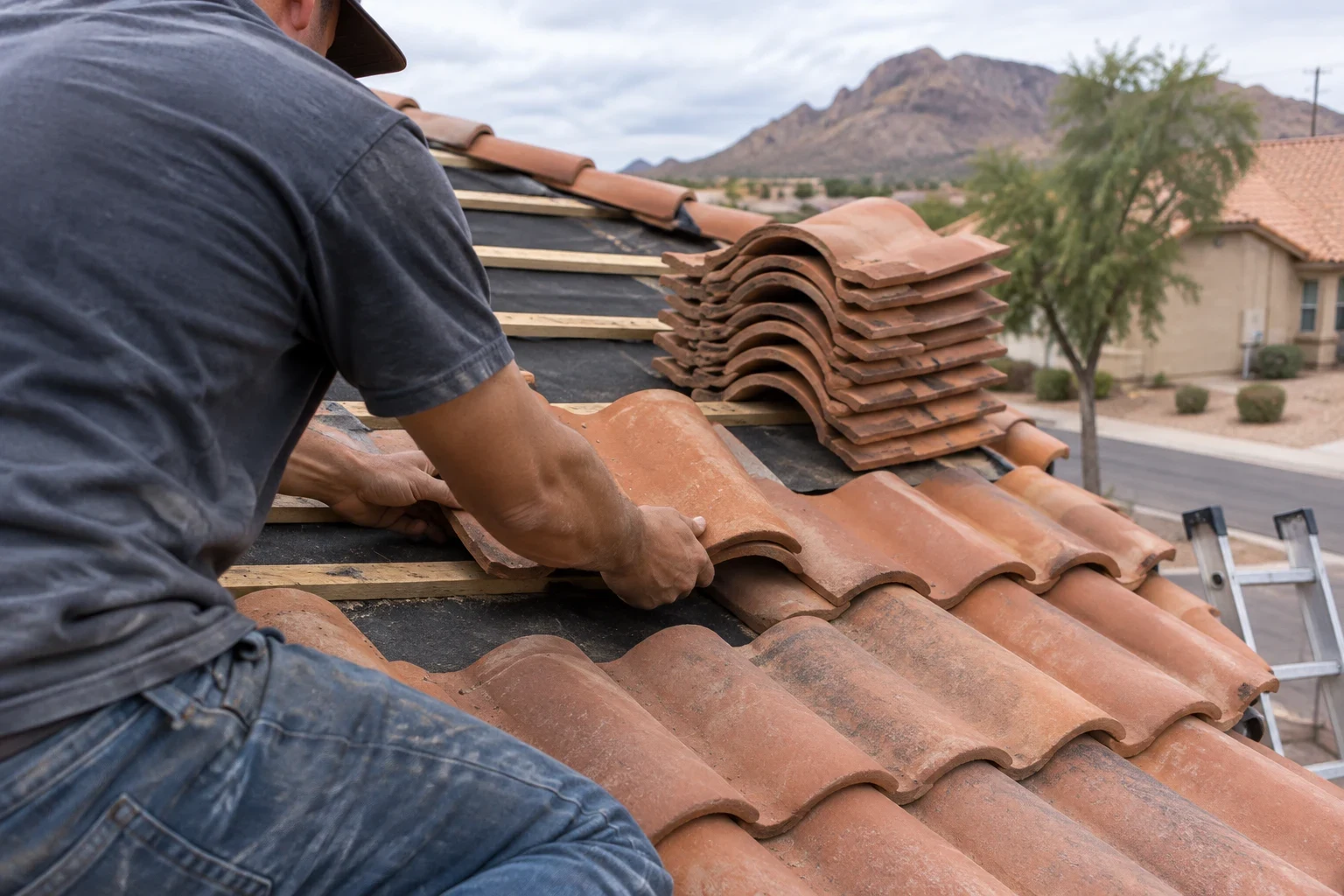
Full tile systems on new homes or as a replacement for an older roof. We set battens, underlayment, flashing and tile to fit your roof's pitch and layout.
Underlayment lift-and-relay
We remove your tiles, stack them safely, replace the worn underlayment and reinstall the tile. Reusing sound tile keeps cost down and keeps your home's look the same.
Cracked and slipped tile repair
Broken tiles let sun and water reach the underlayment faster. We swap damaged pieces and reset slipped ones so the field stays tight.
Ridge, hip and mortar work
Mortar along ridges and hips cracks and loosens with heat and time. We repoint or reset these lines so they stay secure in wind.
Flashing and valleys
Valleys, walls and roof penetrations are where tile roofs usually leak first. We replace tired metal and clear the debris that backs water up under the tile.
Signs Your Tile Roof Needs Attention
Water marks on a ceiling
A spot inside the house usually points to underlayment that has given out somewhere, even when the tile looks good from the curb.
Broken or gone tiles
Other trades walking the roof, branches that drop and plain age all break tile. Every opening leaves the layer underneath in full sun.
Ridge caps shifting or mortar falling apart
Openings along the top of the roof, or chunks of mortar in the yard, mean the ridge needs to be reset.
Drips only in hard rain
When a roof holds up most months but leaks in a monsoon cloudburst, a tired valley or flashing spot often can't move that much water fast enough.
Years of service and no re-lay yet
A tile roof that has been up a long time on its original underlayment deserves an inspection before a leak forces the issue.
How a Tile Job Runs
- 1
It starts with a call
Let us know what you've noticed and about how many years the roof has been up. Then we book a visit to see it.
- 2
An inspection you can see
We move across the roof with care, lift tiles where it helps and photograph what turns up. Your written estimate itemizes the work and puts repair and replacement next to each other when either one is reasonable.
- 3
The work, with your property covered
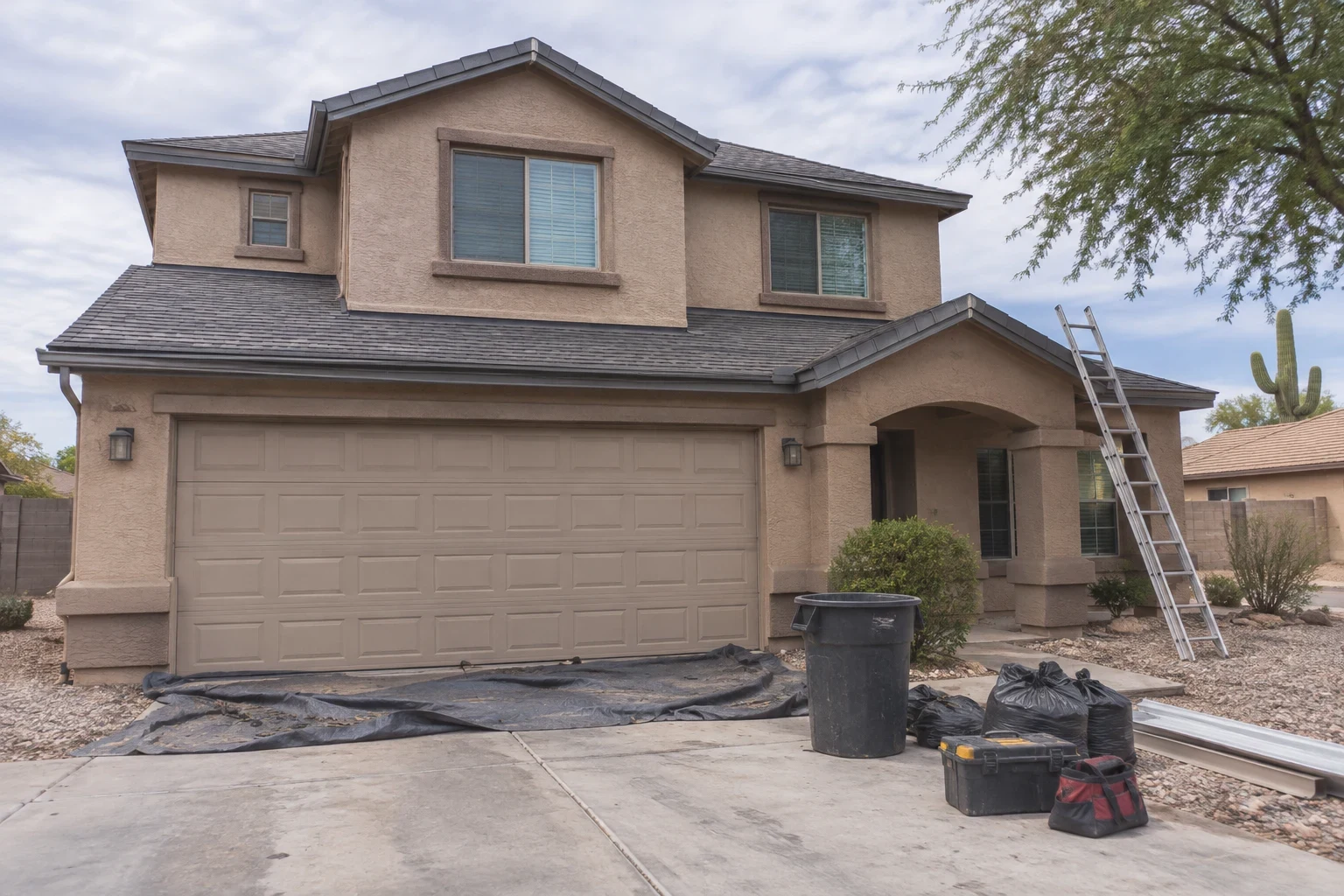
Plants get covered and paths stay open. We stage tile on the roof or the ground where it won't crack, and any open section is closed up before we leave for the day.
- 4
Haul-off and final review
Old underlayment, broken pieces and scrap go with us, the yard gets swept for nails, and we go over the finished roof and the photos with you.
What Moves the Cost of a Tile Roof
Tile has a higher up-front cost than many roofs, and it can return that over a long service life with modest upkeep. Your estimate depends on a few things we'll point out in writing. We'd rather you see the trade-offs clearly than be surprised later.
- Roof size and pitch
- More squares of roof and steeper slopes take more material and more careful handling.
- How much tile can be reused
- Reusing sound tile on a lift-and-relay saves a lot compared with buying new. Brittle or discontinued tile may need partial or full replacement.
- Underlayment choice
- Heavier, longer-lasting underlayments cost more now and can stretch the time before your next re-lay. We'll explain what each option means for the years ahead.
- Concrete or clay
- Clay is usually the pricier tile, while concrete is heavier and more common. Both have long lives, and the right pick depends on your home's structure and the look you want.
- Details and condition underneath
- Valleys, skylights, chimneys and any damaged decking or battens we find add labor and material.
Tile Roofing Questions
Something not covered here? (480) 660-9041
My tiles look fine. Why is my roof leaking?
Tile mostly sheds water and blocks sun. The underlayment below is the real waterproofing, and it wears out much sooner than the tile. A leak with good-looking tile usually points to underlayment or flashing, which we can often fix without new tile.
Can you reuse my existing tile?
Often, yes. On a lift-and-relay we remove the tile, replace what's underneath and put your tile back. A few pieces usually break in handling, so we plan for replacements that match as closely as possible.
Is tile worth it compared with shingles?
Tile costs more to install but tends to last much longer and handles heat well. Shingles cost less up front and need replacing sooner. We're glad to price both so you can compare over the years you plan to stay, and our Shingle Roofing page covers that side.
Can my house carry a tile roof?
Tile is heavy, especially concrete. If you're switching from a lighter material, the roof framing has to support the added weight. We check this before recommending tile, and if it isn't a good fit we'll say so.
Is it okay to walk on my tile roof?
It's best to avoid it. Tiles crack under the wrong step, and those cracks let sun and water through. If a solar installer or other trade needs roof access, ask them to take care, and tell us if you notice broken pieces afterward.
Find Out What Your Tile Roof Really Needs
Describe what you're noticing up top and roughly how old the roof is, and we'll arrange a visit. Your written estimate puts today's cost next to the upkeep and lifespan you can expect.