ServicesRoof Repair
Roof Repair in Apache Junction
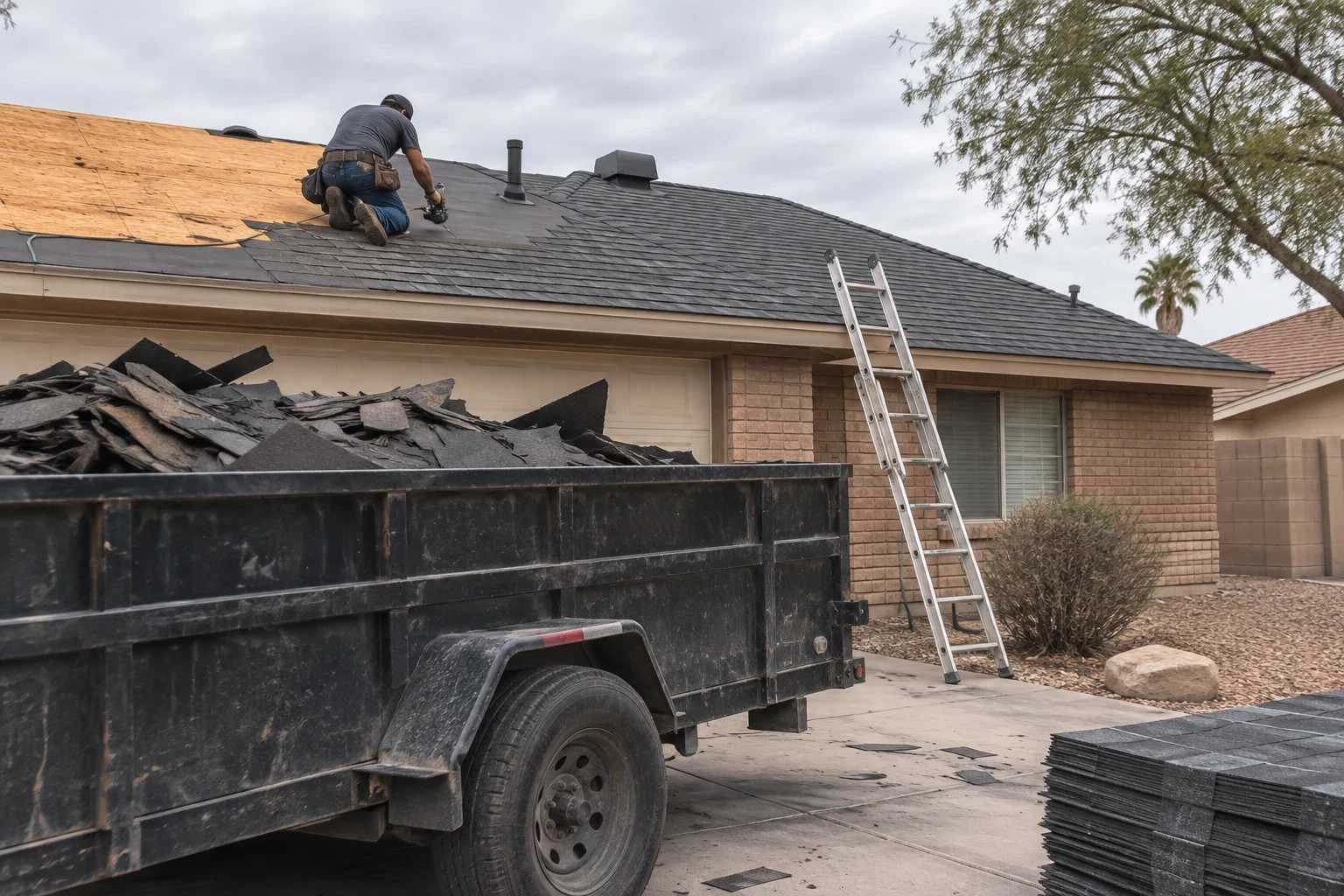
A drip in the hallway or one broken tile usually traces back to a single weak point, not a worn-out roof. We locate where moisture is really entering, repair that spot properly and give you an honest estimate of how long the fix will keep your home dry.
When a repair is the smart choice
Roof trouble tends to begin at one weak point. A vent collar splits after years of hard sun, a tile slides out of its row, or a seam on a low-slope roof pulls apart. Handled early, that is a contained fix. Left for a season or two, moisture soaks into the decking and drywall, and the bill grows along with it.
We do not stop at the wet spot you can see. Water usually runs along the decking before it drops, so the real opening may sit several feet upslope from the mark inside. Once we find it, we weigh the cost of fixing it against the age and shape of the whole roof. When a repair will give you solid years, you will hear that from us. When the roof is worn out and repairs would keep piling up, we will be just as plain about it and can explain how our roof replacement work compares.
Repair work we handle
- 01
Tracking down the leak
We read the water marks inside, check the decking and look for damp insulation, then follow the trail to the true opening. Patching the wrong place is the usual reason a leak returns.
- 02
Tile and the layer beneath it
On a tile roof, the tiles shed the bulk of the water, while the felt or membrane below is the real seal for your home. When years of heat have left that membrane brittle and cracked, we lift the tile over the problem area, put down fresh underlayment and reset the tile, swapping in new pieces for any that are broken.
- 03
Shingle fixes
Curled, split or missing shingles get replaced and sealed down so they sit flat. We blend the new pieces with the existing rows as well as current material permits.
- 04
Foam and flat roof patches
On foam, we cut out blisters, bird damage and worn patches, fill them and apply new coating. On flat roofs, we close separated seams, address low areas by the drains and redo earlier patches that have failed.
- 05
Flashing and roof openings
Vent pipes, cooler and AC stands, skylights and the joints where roof meets wall are frequent leak points. We swap out split vent collars and rebuild loose or corroded flashing so the seal holds.
- 06
Leaving the site tidy
Before we head out, we clear away scrap material, stray fasteners and any debris from the roof and the ground around your home.
Questions about Roof Repair?
Call(480) 660-9041Signs it is time for a repair
Marks on your ceiling
A tan or brown patch, or drywall that feels soft, often means moisture has been entering for some time. Even a stain that has dried out deserves attention.
Broken or shifted tiles
Walking on the roof, debris and daily heating and cooling can split tile or push it out of place. Any opening exposes the underlayment to sun and rain.
Cracked vent collars
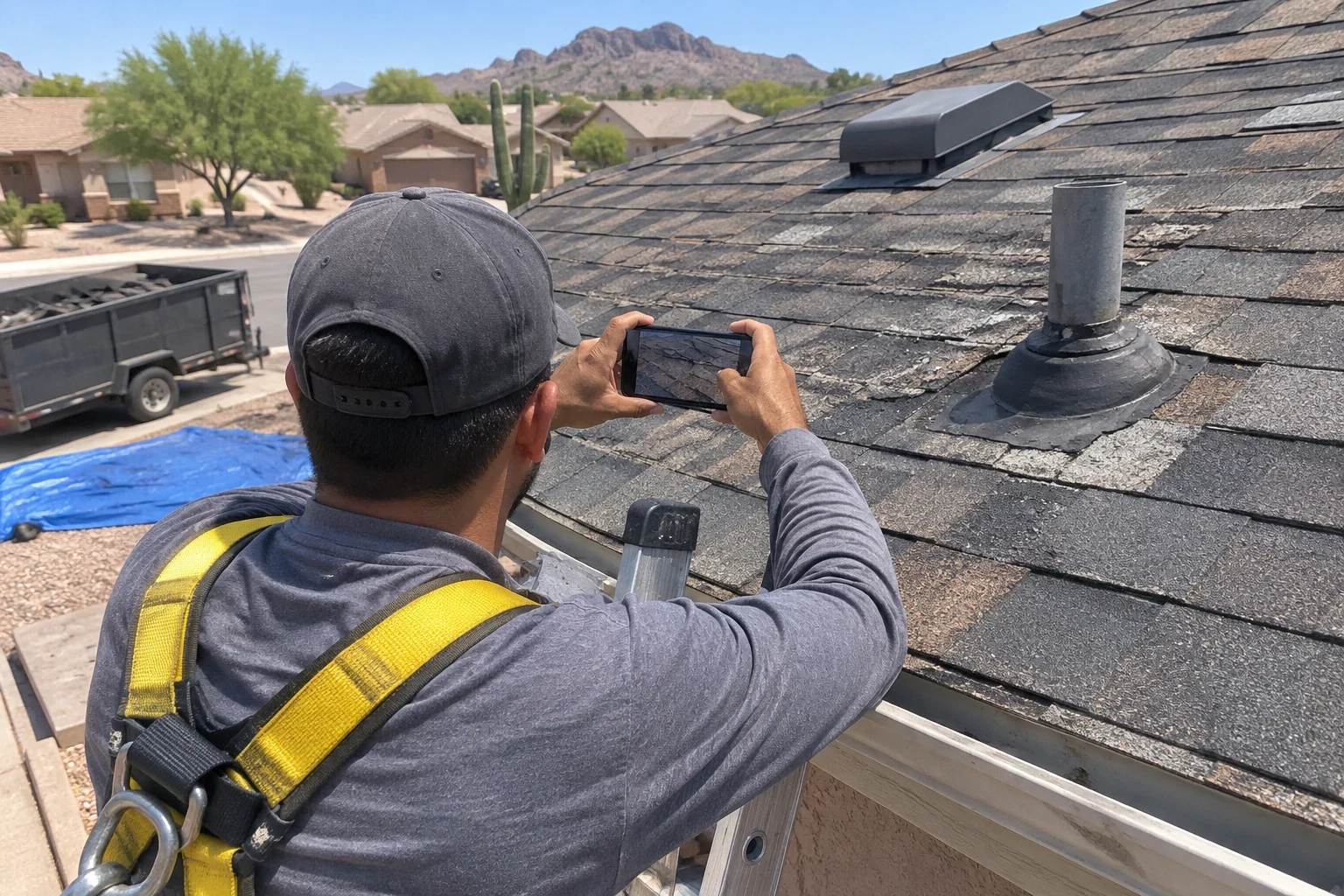
The rubber seals around plumbing vents stiffen and tear under strong sun. Look for a gap or dark ring where the pipe meets the roof.
Worn spots on a foam roof
Once the protective coating wears thin, foam breaks down fast. Catching small blisters and exposed areas early keeps the fix small.
Puddles that will not dry
Water still sitting on a flat roof days after rain strains seams and coating. It usually means a low area or a clogged drain path.
A drip with the first summer rain
When the first big monsoon rain brings a drip, a weak point has likely been forming through the dry months. Fixing it now keeps the next rain from finding it.
What happens from call to cleanup
- 1
Start with a phone call
Let us know what you have noticed, where the drip or mark shows up and what your roof is made of. Then we pick a time to come by.
- 2
Locating the cause
We go up on the roof, and into the attic if there is access, to follow the water. We photograph each problem we turn up, so you see exactly what we saw.
- 3
An honest answer and a written quote
We walk you through what broke down, what fixing it takes and about how long it should last given the condition of the rest of the roof. A written, itemized quote comes before any work does.
- 4
Doing the repair
Most fixes take one trip. We cover plants and paths under the work area, match materials as closely as possible and leave the site clean when we are done.
What moves the price of a repair
Two things drive most repair bills: which part of the roof failed and how far the moisture spread before anyone noticed. We price the job only after we have been up on your roof, so the figure matches the real work. We also put that cost next to the years the rest of the roof has left, so you can judge whether repairing now is money well spent.
- The kind of roof you have
- Fixing tile often means pulling and relaying pieces to get at the underlayment, which is more labor than swapping a few shingles. On foam and flat roofs, the price follows how much surface needs fresh coating.
- Damage under the surface
- Decking that has stayed wet can soften or rot, and those boards need to be cut out and replaced. Sometimes the full extent only shows once the top layer comes off, and we tell you right away if it does.
- How big the problem area is
- Resealing one vent collar is quick work. Replacing a long run of underlayment or rebuilding an entire valley takes much more time and material.
- Pitch and reach
- A steep slope, a second-story edge or a cramped spot between rooftop units means more setup and slower, safer work.
- Finding matching material
- Certain older tile shapes and shingle colors are no longer made. Tracking down a close substitute can add to the cost.
Common roof repair questions
How do I know if repairing is enough, or if I need a new roof?
A roof with one clear, contained problem is usually a good repair candidate. When the underlayment is breaking down over wide sections, or leaks keep turning up in different rooms, paying for fix after fix can end up costing more than replacing. We show you the photos and explain which way we would lean and why.
Nothing looks broken on my tile roof. Where is the water coming from?
The tile is built to last for decades, but the felt or membrane underneath wears out much sooner. Heat bakes it brittle until it cracks, and rain that slips past the tile reaches the wood. Renewing that layer where the leak is usually stops the water.
How much time will the work take?
A good share of repairs wrap up in a single visit, often within a few hours. Bigger underlayment sections or rotted boards can stretch to a full day or longer. Your quote spells out the expected timeline before we begin.
Will the repaired area stand out?
We aim to match the tile shape, shingle color or coating with what is already on your roof. With older materials, a perfect match is sometimes not available, and we let you know ahead of time if the patch will be visible.
Can you fix a foam roof another company put on?
Yes. We work on foam, flat, tile and shingle roofs no matter who installed them. If your foam roof really needs a full recoat instead of spot work, we lay out how the two compare in cost and in the years each one buys you.
Get a clear plan for that leak
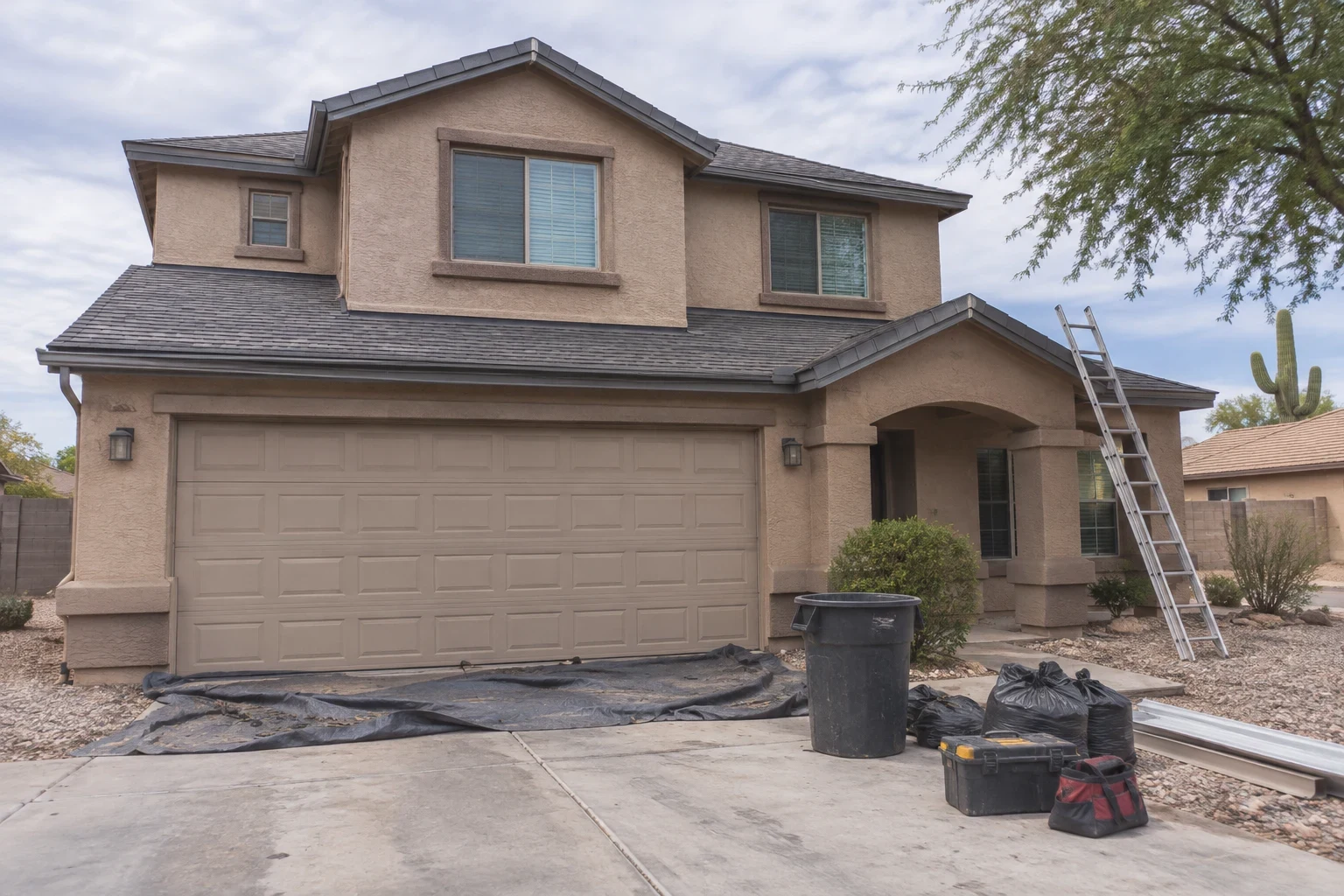
Describe the drip, stain or damaged spot and we will arrange a visit. We locate the cause, put a written quote in your hands and give you an honest sense of how long the fix will hold.