ServicesFoam Roofing
Foam Roofs for Apache Junction Homes
We install new sprayed foam roofs, put fresh coating on tired ones and fix areas where the foam has worn down. You'll hear what the roof costs now and what it will call for over the coming ten years, so the house stays dry and cooler.
What a Foam Roof Does for Your Home
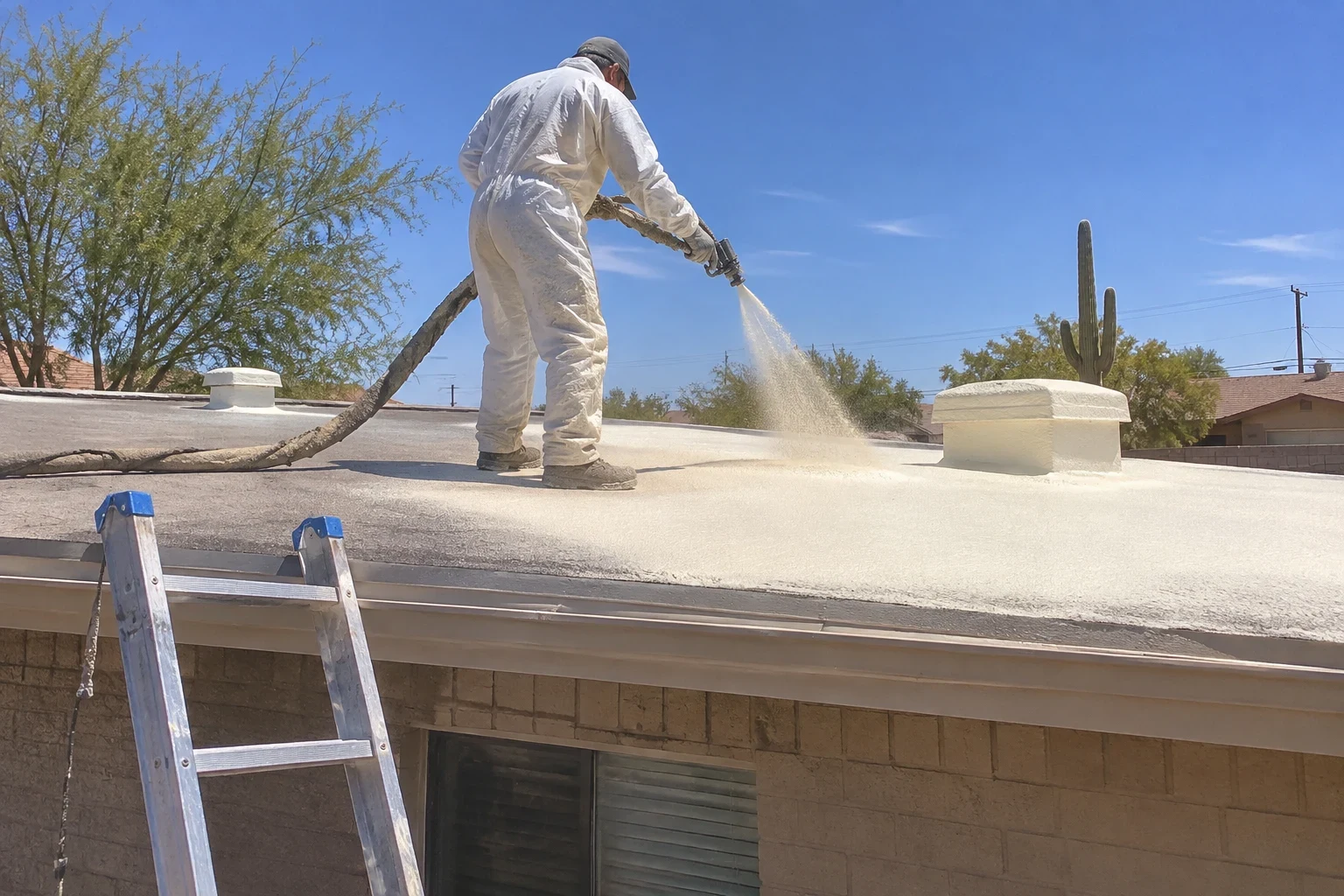
Spray polyurethane foam goes on as a liquid and expands into one solid layer with no seams to split. It sticks to the deck, can be built up to slope water toward the drains, and adds real insulation above your ceiling. On a flat or low-slope roof, that combination is hard to beat.
Foam has one weakness: sunlight. Bare foam turns from tan to dark brown and starts to crumble. A coating on top shields it, and that coating wears down over time. A foam roof that gets recoated when it needs it can last for decades. One that gets ignored can fail years early.
That is why we talk about the whole life of the roof, not just the install day. A thicker coating or a better product may cost more now and save you a recoat later. We lay out both paths so you can pick the one that fits your budget and your plans for the house.
What Our Foam Roofing Work Includes
- New spray foam roofs
- We spray closed-cell foam over a clean, dry deck and shape it so water runs off instead of sitting. Then we apply a coating system on top.
- Recoating worn foam
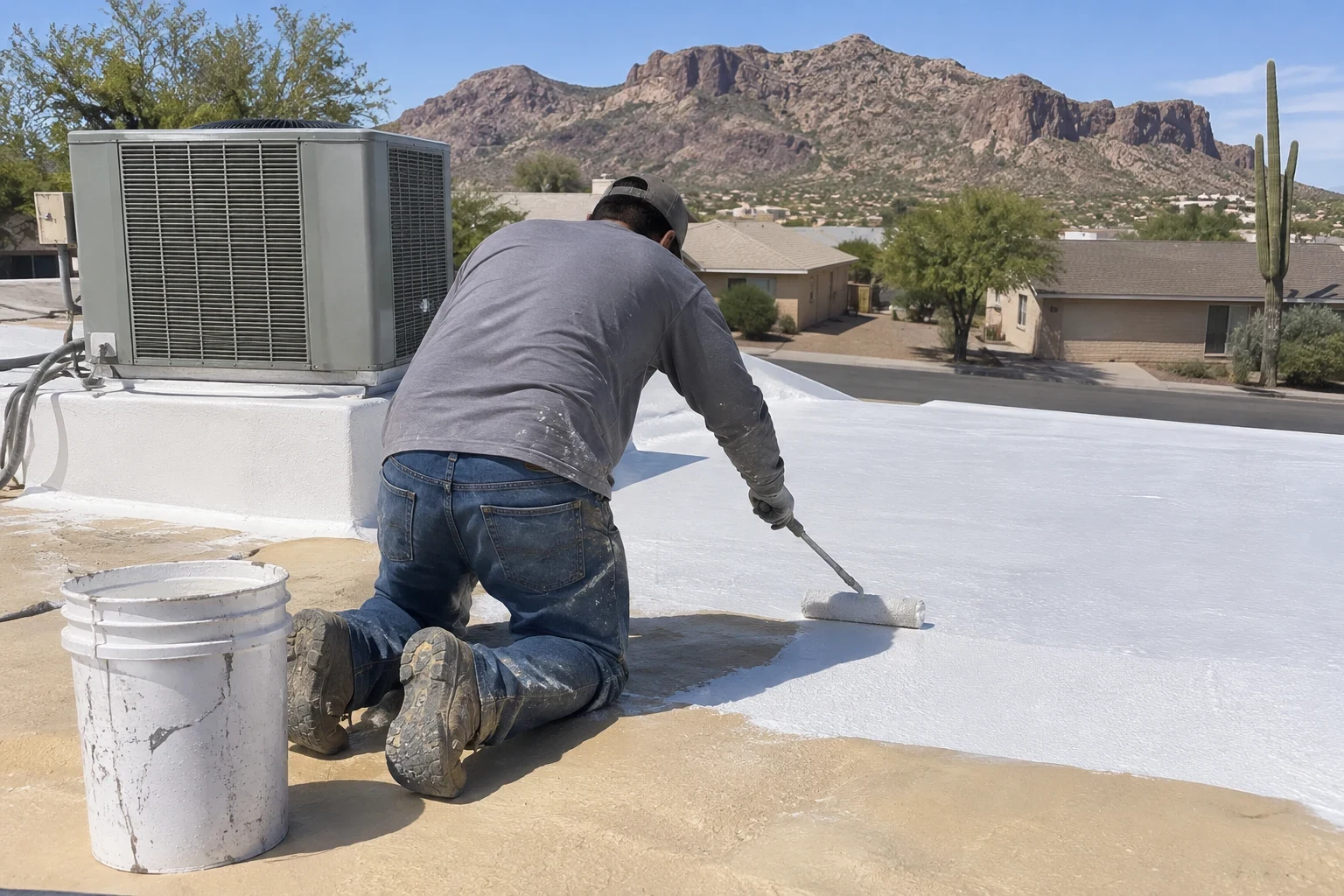
- If the foam underneath is still sound, a fresh coating is usually the most cost-effective move you can make. We clean the surface, patch any damage and apply new coats at the right thickness.
- Spot repairs
- Blisters, bird damage and cracks around vents get cut out, filled with new foam and sealed. Small fixes caught early keep water out of the foam itself.
- Coating choices explained
- Acrylic and silicone coatings behave differently in heat and standing water, and they cost different amounts to maintain. We tell you which one suits your roof and why.
- Protecting your property
- Foam overspray can drift, so we mask windows, walls, AC units and vehicles before we spray. When we leave, the yard and driveway are cleaned up.
Signs Your Foam Roof Needs Attention
Bare or brown foam showing
If you can see foam through the coating, the sun is already breaking it down. A recoat now costs far less than replacing damaged foam later.
Blisters or soft spots
Bubbles that give underfoot often mean moisture got under the coating or into the foam. Those areas need to be opened and repaired.
Chalky coating that rubs off
Some chalking is normal with age. When your hand comes away white and the surface looks thin, the coating is close to the end of its life.
Water that won't drain
Puddles that stay a couple of days after rain point to low spots. Over time they wear the coating faster and can find their way inside.
Pecked holes or cracks at vents
Birds like to peck at foam, and seams around pipes and AC stands crack with heat. Both are easy entry points for water.
Ceiling stains after monsoon storms
A leak usually means the problem has been building for a while. We trace it back to its source on the roof before patching anything.
What Sets the Cost of a Foam Roof
Foam is priced per square foot, yet the true cost hinges on what lies beneath and how much coating you want over it. We give you the install price and an estimate of when the next recoat will be due, so the options compare fairly.
Size and layout
A larger roof takes more foam and coating. Parapets, curbs and many penetrations add labor.
State of the current roof
Healthy foam can often just be recoated. Foam that is wet or badly damaged must come off first, adding time and disposal.
How thick the foam goes
A thicker layer costs more, but it adds insulation and lets us build slope where water gathers.
Coating product and thickness
A heavier coating adds to the price now and lengthens the gap between recoats. Your estimate shows that trade-off in plain numbers.
Reaching the roof
Rooftop AC units, narrow side yards and tall walls change how we bring rigs and material into position.
How a Foam Roofing Job Runs
- 1
We look and listen
We walk the roof, check the foam's condition and talk with you about how long you plan to stay in the home. That shapes whether a recoat, repair or new foam makes the most sense.
- 2
A written estimate
You get a line-item estimate showing foam thickness, coating type and any repairs, along with what each option means for upkeep down the road.
- 3
Prep and protection
We pressure-wash the surface, remove loose or damaged material and mask everything nearby. Foam needs a dry roof and calm air, so we schedule around wind and rain.
- 4
Spray and coat
Foam goes on in passes to the planned thickness, then the coating follows in base and top coats. On hot summer days we often start early, before the surface gets too warm to work.
- 5
Walkthrough and cleanup
We show you the finished roof, point out what to watch for and clean up before we leave.
Common Questions About Foam Roofs
How often will my foam roof need a new coating?
That hinges on the coating product, how thick it was applied and how much sun hits the roof. We measure how much coating is left and give you a realistic timeline. Keeping up with recoats is what turns foam into a solid long-term value.
Can foam go on top of my current roof?
In some cases. When the current roof is dry and firmly attached, foam can be sprayed over it and you skip tear-off costs. When moisture is trapped or material is loose, it must be removed first, and we'll tell you which applies to your roof.
Can a foam roof lower my cooling costs?
Foam puts insulation above your ceiling, and a pale coating bounces back much of the sun's heat. Plenty of homeowners find the rooms under the roof stay more comfortable. The savings depend on the insulation your home already has.
Should I pick foam or another kind of flat roof?
Foam is one kind of flat roof system and suits a lot of homes. If your roof sees a lot of foot traffic or has other demands, we might point you to another option from our flat roofing work. We compare the cost and upkeep of each, and you make the call.
What if rain shows up mid-job?
We never spray a wet roof or with storms nearby. If weather rolls in, we pause, cover the work and return once the surface has dried.
Get a Clear Plan for Your Foam Roof
Give us a ring and describe what is going on up top. We will arrange a visit, look over the foam and coating, and explain your recoat, repair or new foam options, including what each one costs over the years ahead.